A Complete ELA Unit for Literary & Informational Text Analysis
Teaching Fahrenheit 451 by Ray Bradbury gives you a rare opportunity to blend literary analysis, close reading skills, and informational text study in one cohesive unit.
- lose reading strategies
- nonfiction and informational text analysis
- text-based evidence
- discussion and writing
- blended and digital learning
👉 View the complete Fahrenheit 451 unit here.
What Makes This Fahrenheit 451 Novel Study an Effective ELA Resource?
This isn’t just a literature unit—it’s a reading comprehension, close reading, and critical thinking framework built around a classic novel.
Teachers use this unit to:
- teach fiction and nonfiction together
- practice analyzing informational texts
- strengthen annotation and evidence-based responses
- connect literature to real historical documents and modern issues
It works as both a novel study and a cross-text informational reading unit.

Before Reading: Informational Texts That Build Context
Strong close reading starts with background knowledge. This unit intentionally blends nonfiction reading and discussion before the novel begins.
Pre-Reading Bias & Discussion (Speaking + Listening)
Students respond to debatable statements connected to censorship, freedom, control, and happiness—building schema and preparing for later argumentative and informational writing.

Utopias & Dystopias Introduction (Slides / Informational Lesson)
Students explore characteristics of utopias and dystopias through informational slides and discussion, giving them academic vocabulary and genre awareness before reading the novel.
Nonfiction Reading & Real-World Text Connections
Students analyze informational texts connected to:
- book banning and book burning
- McCarthyism and the Red Scare
These nonfiction readings help students practice:
- close reading of informational text
- identifying central ideas
- analyzing historical context
- connecting nonfiction evidence to a literary text

During Reading: Close Reading & Text-Based Analysis
This unit keeps students interacting with the text through purposeful close reading activities, not passive comprehension questions.
Plot & Conflict Graphic Organizers
Students analyze how events develop across the plot arc while identifying multiple types of conflict—reinforcing structure, cause-and-effect, and textual evidence.
Character Analysis (Close Reading Focus)
Learners track character motivations, internal conflict, and development through repeated textual evidence—an essential close reading skill.
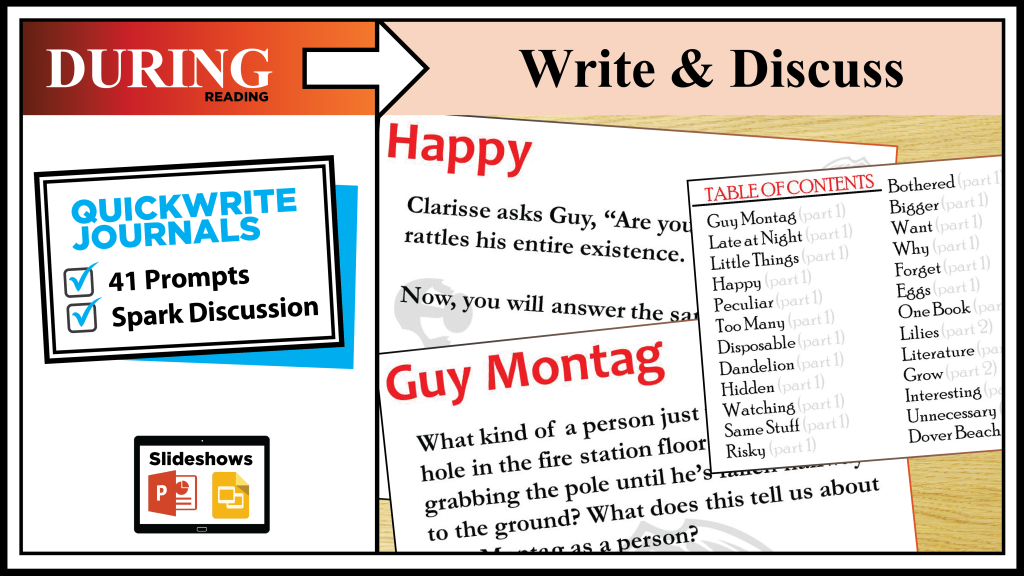
Journal Quickwrites (Text-Dependent Writing)
Students respond to text-dependent prompts that require:
- quoting passages
- explaining ideas
- connecting literature to real-world themes
These serve as informal constructed responses and discussion starters.
Vocabulary in Context
The included 180-word vocabulary unit focuses on:
- words as they are used in the text
- meaning through context clues
- application in writing
This aligns naturally with close reading and comprehension standards.
Integrating Fiction & Informational Reading Skills
A major strength of this Fahrenheit 451 unit is how it blends:
- literary analysis
- informational text reading
- nonfiction discussion
- evidence-based writing
Students practice moving between:
- fictional narrative
- historical documents
- modern nonfiction connections
— exactly the skill they need for secondary ELA success.

After Reading: Informational Writing, Argument, & Synthesis
Literary & Informational Essay Options
Students write structured responses that draw on:
- the novel
- nonfiction background texts
- historical context
Rubrics support argumentative and explanatory writing using textual evidence.
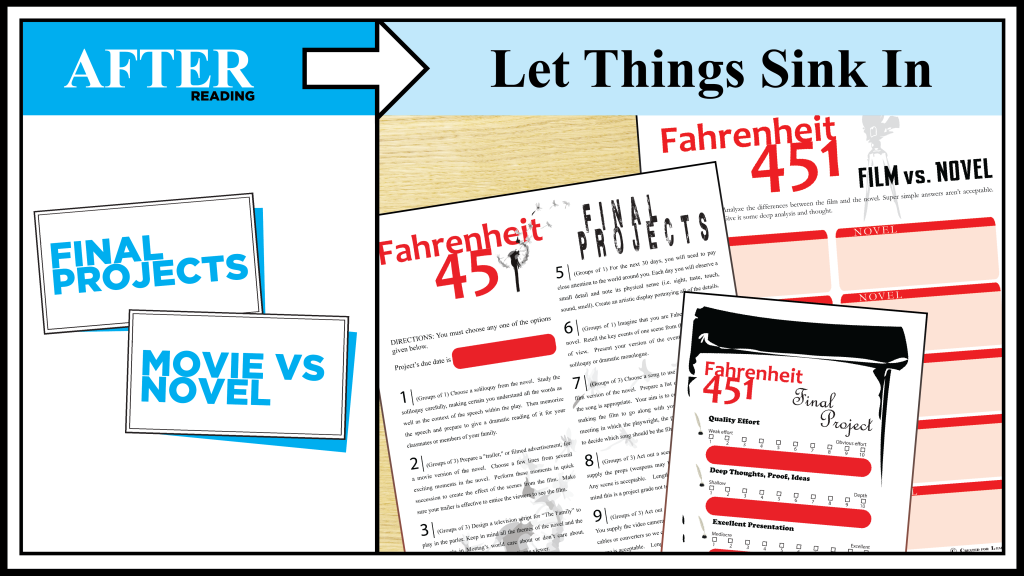
Movie vs. Novel Comparison (Text Comparison Skills)
Students compare two versions of the same story, analyzing medium, author choices, and theme development—a core informational comparison skill.
Final Projects (Research + Presentation Options)
Students synthesize ideas from both literary and informational sources through creative and analytical projects.
Print + Digital Resources for Reading Instruction
Every activity includes:
- printable PDFs
- Google Slides for instruction
- Google Forms for reading checks and quizzes
This makes the unit ideal for:
- close reading lessons
- informational text days
- substitute plans
- hybrid or digital classrooms
Who This Unit Supports Best
This Fahrenheit 451 novel study works especially well for teachers looking to:
- strengthen close reading skills
- integrate nonfiction and literature
- teach informational text alongside novels
- support discussion, annotation, and writing
- reduce prep time with ready-to-use digital resources
Ready to Teach Fahrenheit 451 as Both Literature and Informational Study?
If you’re looking for a print + digital Fahrenheit 451 unit that supports:
- close reading
- nonfiction connections
- informational text analysis
- writing and discussion
👉 You can explore the full unit here.
Conversation of the Day
Which nonfiction connection — book banning, government control, or media influence — do your students respond to most when reading Fahrenheit 451?